What Does Emergency HVAC Service Cost? (2026 Guide)

Table of Contents
Emergency HVAC Service Cost: The Real Breakdown
Diagnostic Fee vs. Repair Cost: What You're Paying For
Common HVAC Emergencies and Their Price Drivers
When to Call Emergency HVAC: Don't Wait for These Failures
Troubleshooting HVAC Before Calling a Pro: Safe First Steps
Central AC vs Ductless Mini Split Emergency Repair Costs
How to Avoid Emergency Service Fees with Preventative Maintenance
Getting an Accurate Emergency Repair Estimate
Frequently Asked Questions
Last Updated: September 4, 2026
Emergency HVAC Service Cost: The Real Breakdown
A broken air conditioner in the middle of summer isn't an inconvenience; it's a health and safety issue, especially for vulnerable family members. Many homeowners hesitate before calling for help because they fear the emergency hvac service cost will be astronomical. Understanding what drives those after-hours prices is the first step to making a confident decision when your system fails.
The reality is that emergency HVAC service cost is not a single, fixed number. It is a combination of several distinct charges: the trip charge, the diagnostic fee, and the hourly labor rate, which often increases after normal business hours. At Air Express HVAC LLC, we believe transparency about these components is essential.
Below, we'll dissect each fee, explore common emergency scenarios, and arm you with the knowledge to avoid unnecessary charges. We will also cover when a problem truly warrants an immediate call versus when it can wait for a standard appointment, and how preventative maintenance can save you from the most expensive repair scenarios.
Diagnostic Fee vs. Repair Cost: What You're Paying For
An emergency HVAC service cost is typically split into two main parts: the diagnostic fee and the actual repair cost. The diagnostic fee, sometimes called a trip charge, covers the technician's time to travel to your home and identify the problem. This is a fixed cost that you pay regardless of whether you proceed with the repair.
The repair cost is the labor and parts required to fix the identified issue. This is where the price can vary significantly based on the complexity of the failure and the specific components needed. A common point of confusion is that the diagnostic fee is often waived if you approve the repair with the same technician, but this is not a universal policy.
According to guidance from the U.S. Department of Energy on maintaining your system, regular maintenance is the most effective way to prevent the system failures that lead to costly emergency calls. When you receive an estimate, ensure it clearly separates the trip charge, the diagnostic fee, and the projected repair cost so you know exactly where your money is going.
Watch Out Never authorize [a repair](/post/when-to-replace-old-ac-unit-7-key-signs) based on a verbal estimate alone. A reputable technician will provide a written breakdown of the emergency HVAC service cost, including parts and labor, before starting any work. This protects you from "scope creep" where the final bill is significantly higher than the initial quote.
Common HVAC Emergencies and Their Price Drivers
Several specific failures account for the majority of emergency calls. Understanding these can help you gauge the severity of your own situation and anticipate the potential investment required for a fix.
Refrigerant Leaks: This is a common cause of AC failure. The cost driver here is not just the refrigerant itself, but the labor-intensive process of locating and repairing the leak, which requires specialized equipment.
Capacitor Failure: The capacitor is a small but critical component that starts the motor. When it fails, your AC unit may hum but not turn on. The part is inexpensive, but the emergency dispatch and labor are what drive the cost.
Ignition Failure or Gas Valve Issues: For furnaces, these are serious problems that can prevent heat from turning on during a cold snap. They require immediate attention from a technician qualified to work with gas lines.
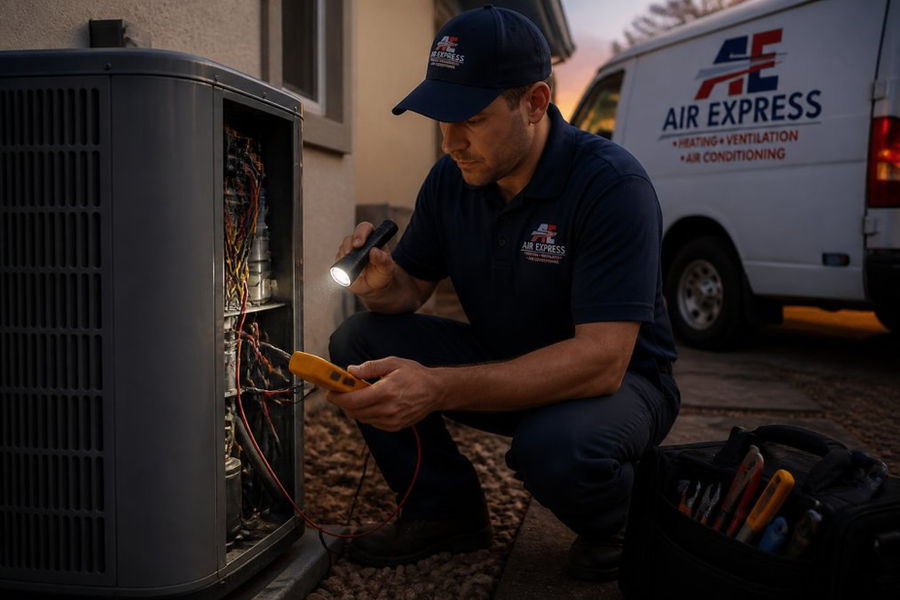
The labor rates for these urgent repairs are often higher than standard business hours. This reflects the demand-driven pricing of after-hours service, which includes weekend and holiday surcharges. While the specific numbers vary by provider, the structure of the bill remains consistent: a premium for immediate, out-of-hours dispatch.
When to Call Emergency HVAC: Don't Wait for These Failures
Knowing when to call emergency HVAC services can mean the difference between a minor repair and a major system replacement. Waiting too long often allows a small issue to cause catastrophic damage to your compressor or heat exchanger, turning a manageable repair into a full system failure.
You should call for emergency service immediately if you encounter any of the following:
Burning Smells: A persistent burning odor from your vents could indicate an electrical short or a failing motor, posing a fire risk.
No Airflow or Heat: During extreme temperatures, a complete system failure is a health emergency, particularly for the elderly or those with medical conditions.
Refrigerant Line Ice: If you see ice building up on the refrigerant lines, it indicates a severe blockage or leak that can destroy the compressor if left running.
Water Leaks: Significant water pooling around your furnace or air handler can cause structural damage and electrical hazards.
These scenarios require urgent repair because they threaten your safety or the integrity of the system. In contrast, a system that is making unusual noises but still cooling might warrant a standard service call, where you can avoid the after-hours premium associated with an emergency dispatch.
Pro Tip If your system is running but underperforming, check your thermostat settings and air filter first. A clogged filter is a leading cause of reduced airflow and can make a healthy system appear broken. This simple troubleshooting step could save you the cost of an unnecessary emergency visit.
Troubleshooting HVAC Before Calling a Pro: Safe First Steps
There is a distinct line between safe, basic troubleshooting and tasks that require a licensed professional. Crossing that line is not only dangerous but can also void your equipment warranty and lead to more expensive repairs down the line.
Before you make the call, check these items:
Thermostat: Is it set to the correct mode (heat or cool) and temperature? Are the batteries dead?
Circuit Breaker: Has the breaker for your HVAC system tripped? Reset it once; if it trips again, there is a short circuit that needs a professional.
Air Filter: Is it visibly dirty? A severely clogged filter can restrict airflow enough to cause ice formation or system shutdown.
Condensate Drain: Is the drain line clear? Many systems have a safety switch that shuts the unit down if the drain pan is full.
These are safe diagnostic steps for any homeowner. However, you should never attempt to open the electrical panel, handle refrigerant, or disassemble the gas valve. Those tasks involve high voltage, pressurized chemicals, or combustion gases, all of which pose serious safety risks. According to safety guidelines for homeowners from the Occupational Safety and Health Administration, untrained individuals should not attempt repairs on complex mechanical systems. If these basic steps don't resolve the issue, it is time to call a professional.
Central AC vs Ductless Mini Split Emergency Repair Costs
The type of system you own significantly influences the potential emergency repair cost. Central AC systems are the most common in single-family homes, and their repair costs are generally well-understood by technicians. Ductless mini splits, while increasingly popular for their efficiency, have a different cost structure.
For central AC vs ductless mini split emergency repair, the primary difference lies in the components. A central AC failure often involves the condenser unit outside or the air handler in the attic. In contrast, a ductless mini split is a wall-mounted unit with a complex circuit board and a specialized compressor. Repairing or replacing these proprietary parts can be more expensive because they are not as universally stocked.
System Type | Common Failure Point | Typical Complexity | Cost Consideration |
Central AC | Capacitor, contactor, refrigerant leak | Moderate | Parts are common; labor is the main driver |
Ductless Mini Split | Circuit board, blower motor, refrigerant leak | High | Proprietary parts may need to be ordered, increasing cost and time |
The choice between repairing a central AC versus a ductless mini split also depends on the age of the system. If a mini split's compressor fails, the cost of the part and labor can approach the price of a new unit. In these situations, a technician from Air Express HVAC LLC might recommend a replacement over a repair, as the long-term value of a new, energy-efficient system with a warranty often outweighs the cost of a major repair on an aging one.
How to Avoid Emergency Service Fees with Preventative Maintenance
The most effective way to reduce your emergency HVAC service cost is to prevent the emergency from happening in the first place. Preventative maintenance is the single best investment a homeowner can make in their HVAC system, as it addresses minor issues before they escalate into major failures that require after-hours dispatch.
A professional tune-up typically includes inspecting the refrigerant charge, testing the electrical connections, cleaning the coils, and verifying the thermostat's accuracy. This process catches the early signs of wear and tear that lead to capacitor failure or refrigerant leaks. By scheduling maintenance twice a year, once for cooling and once for heating, you dramatically reduce the likelihood of a mid-summer breakdown.
Many companies, including Air Express HVAC LLC, offer service contracts or membership plans that include these regular tune-ups. The ROI on these plans is substantial, as they often provide priority service and discounts on repairs, which can offset the cost of the membership itself. Furthermore, a documented history of regular maintenance is often required for a manufacturer's warranty to remain valid, protecting you from the cost of a full system replacement if a major component fails prematurely.
Getting an Accurate Emergency Repair Estimate
When you call for emergency service, you should be prepared to receive an accurate estimate before work begins. A professional will ask detailed questions about the symptoms, the age of your system, and any maintenance history. This information helps them come prepared with the most likely parts needed, reducing the time spent on the diagnostic phase.
A fair estimate will always include a breakdown of the emergency service fee, the hourly labor rate, and the estimated cost of parts. Be wary of any provider that gives a flat "all-in" price without first inspecting the system, as this often leads to unexpected add-ons later. As documented in consumer advice on hiring contractors from the Federal Trade Commission, getting multiple quotes and asking for written estimates are the best ways to ensure you are paying a fair price for services.
Ultimately, the goal is to find a provider that is transparent about its pricing structure and stands behind its work. A guarantee on parts and labor, such as the "10 year worry free parts and labor guarantee" offered by Air Express HVAC LLC, provides peace of mind that the repair will be done correctly the first time, protecting you from repeat failures and additional emergency calls.
Understanding the true cost of an emergency HVAC service call is about more than just knowing the price of a trip charge; it's about recognizing the value of a system that runs reliably when you need it most. The most expensive scenario is always a complete system failure that could have been prevented with a simple tune-up or an early repair. We recommend scheduling regular maintenance and addressing minor issues promptly to avoid the stress and higher costs of after-hours breakdowns. When you do face an urgent failure, Air Express HVAC LLC is available 24/7 to service all brands, makes, and models, ensuring your comfort in every season. GIVE US A CALL to get a clear, upfront estimate and restore your home's comfort quickly.
Frequently Asked Questions
What qualifies as an emergency HVAC repair?
An emergency HVAC repair is any system failure that poses a safety risk or leaves your home uninhabitable. This includes a gas leak, electrical burning smells, refrigerant leaks, a completely dead AC in extreme heat, or no heat in freezing temperatures. A strange noise or minor inefficiency can usually wait for regular business hours. If you have vulnerable family members or the issue threatens property damage, treat it as an emergency and call a 24/7 service.
Does emergency HVAC service cost more on weekends or holidays?
Yes, expect a weekend or holiday surcharge on top of the standard after-hours rate. Many providers apply a flat weekend surcharge and a higher one for major holidays. This covers the cost of keeping technicians on call. You can reduce the impact by asking for a detailed quote before work begins. If the issue is not urgent, waiting until a weekday morning will usually result in a lower service fee.
How can I troubleshoot my HVAC before calling for emergency service?
Start with the basics: check the thermostat is set to heat or cool and not on 'off', and replace the air filter if it looks dirty. Inspect your electrical panel for a tripped breaker and reset it once. Verify the outdoor unit has power and isn't blocked by debris. These simple steps resolve a surprising number of calls. If the system still fails, it's time to call a professional for troubleshooting HVAC before the problem worsens.
What factors influence the total cost of an after-hours HVAC repair?
The final bill depends on the emergency service fee, diagnostic fee, and the specific repair needed. Labor rates are higher after hours, on weekends, and holidays. The cost of parts, like a blower motor or capacitor, adds to the total. System type matters too; a central AC repair may differ from a ductless mini split repair. Always request a written estimate after the diagnostic to avoid surprises.
Is it cheaper to repair a central AC or a ductless mini split in an emergency?
Generally, ductless mini splits can be more expensive to repair in an emergency because parts are often proprietary and may need to be ordered. Central AC systems usually have more common, readily available parts. However, the specific failure dictates the price. A simple fix like a capacitor replacement is inexpensive for either system. A major component failure, like a compressor, will be costly for both. A technician can provide an accurate comparison after diagnosing the issue.
How do I know if I need a repair or a full system replacement?
Frequent breakdowns and rising energy bills also point toward replacement. An honest technician will present both options with clear pricing. Ask about the 10-year parts and labor guarantee on a new system to understand the long-term value before making a decision.
GIVE US A CALL
This article was written using GrandRanker


Comments